Tuesday, April 26, 2016


Monday, December 28, 2015
"The Appalachians are slump-shouldered and low by alpine standards, dwarfed by the Rockies, mere hills next to the raw and knife-edged heights of the Andes or Alaska Range ... they've dwindled to their present size simply because they've had the time to ..." -- Earl Swift, The Tangierman's Lament.
In Europe and in South America, mountains divide. Cross a mountain in South America and although you might still hear the language of the conquistadors, you'll likely be in a different country. Cross a mountain range in Europe and you'll likely have not only a new country beneath your feet but a completely different language ringing in your ears.
Why not in what we call the United States of America? How did it happen that one nation and one language stretches from the Olympics of Washington State to the Appalachian foothills of Georgia? Was it the speed and intensity of settlement? Was it because it took place during a technological revolution, first with trains and then automobiles breaking down barriers of distance and difficulty?
In Europe and in South America, mountains divide. Cross a mountain in South America and although you might still hear the language of the conquistadors, you'll likely be in a different country. Cross a mountain range in Europe and you'll likely have not only a new country beneath your feet but a completely different language ringing in your ears.
Why not in what we call the United States of America? How did it happen that one nation and one language stretches from the Olympics of Washington State to the Appalachian foothills of Georgia? Was it the speed and intensity of settlement? Was it because it took place during a technological revolution, first with trains and then automobiles breaking down barriers of distance and difficulty?
Saturday, December 19, 2015
"Often the lone-dweller waits for favor,
mercy of the Measurer, though he unhappy
across the seaways long time must
stir with his hands the rime-cold sea,
tread exile tracks. Fate is established!"
Thus wrote the ancient Anglo-Saxon "wanderer," in words whose poignancy has never been equaled, of the pain of exile. Does it matter if it is voluntary or imposed?
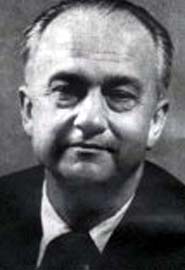
Today I ponder Louis Adamic, a gifted 20th century writer who is not well known these days. Of Slovenian birth, 1899, he emigrated to the United States and threw himself with an immigrant's passion into his new land, becoming known for advocacy of the labor movement. But something must have pained him, some sense of the lost homeland. Two of his books, Native's Return and My Native Land, touched on the subject.
Perhaps that sense of never quite belonging in the new place, of being a stranger even among friends, fueled his founding of the Common Council for American Unity, a group aimed at strengthening ties of human brotherhood.
In one terse line of his entry in Collier's Encyclopedia, the end of his life is summed up: he died an apparent suicide, in 1951. The pain of exile triumphed, albeit in phyrric victory.
Rest in peace, Louis Adamic. You have returned to the homeland from which we never leave again.

mercy of the Measurer, though he unhappy
across the seaways long time must
stir with his hands the rime-cold sea,
tread exile tracks. Fate is established!"
Thus wrote the ancient Anglo-Saxon "wanderer," in words whose poignancy has never been equaled, of the pain of exile. Does it matter if it is voluntary or imposed?
Today I ponder Louis Adamic, a gifted 20th century writer who is not well known these days. Of Slovenian birth, 1899, he emigrated to the United States and threw himself with an immigrant's passion into his new land, becoming known for advocacy of the labor movement. But something must have pained him, some sense of the lost homeland. Two of his books, Native's Return and My Native Land, touched on the subject.
Perhaps that sense of never quite belonging in the new place, of being a stranger even among friends, fueled his founding of the Common Council for American Unity, a group aimed at strengthening ties of human brotherhood.
In one terse line of his entry in Collier's Encyclopedia, the end of his life is summed up: he died an apparent suicide, in 1951. The pain of exile triumphed, albeit in phyrric victory.
Rest in peace, Louis Adamic. You have returned to the homeland from which we never leave again.
Monday, September 7, 2015
Continuing with the Sibylline Oracles ... Book 8
So I continue my slow re-read of these strange pseudepigraphical books -- a great heap of supposed prophecies with nothing to unify them except their pseudepigraphical connection to the mythical, ancient Sibylline Oracles, thus their titles. They are a mixed up salad bowl of Jewish, Christian and pagan concepts -- sometimes impossibly obscure, now and then clear and beautiful.
Sibylline Oracles, Book 8:
This “book” is two writings fused together:
1) Verses 1-216 with exceedingly uncertain (but probably singular and Jewish) authorship dating to around 175 A.D., excepting 131-138, which are the work of an Egyptian Sibyllist. The latter were probably inserted, being pro-Hadrian, by an editor seeking to lessen the earlier attack on Hadrian.
2) Verses 217-500, by a Christian author, before the 4th century.
It is difficult today, when Rome is a tourist destination with all the political power of Lisbon, to fully grasp just what an entity it once was, inspiring fear and absolute loathing hundreds of miles away.
But this is a literary example of this phenomenon. In the era of Marcus Aurelius, the author is one of many who repeats the legend of the dreaded Nero’s return to life and power. One would think that such a loathsome and craven wretch as Nero would have been securely dead and buried in the popular imagination – but apparently not.
***
The hope and theme of this author is summed up in v. 125:
“No longer will Syrian, Greek, or foreigner, or any other nation,
place their neck under your [Roman] yoke of slavery.”
In the second half, the life and Passion of Christ is retold, the one who on the cross will “stretch out his hands and measure the entire world.” v. 302.
“I myself proposed two ways, of life and death ...” (399)
God as “self-begotten, everlasting, undefiled and eternal (429),” per our editor, is also found in pagan writings. He is Master of the Cosmic Treasury. And with the Word He counseled before Creation.
Several times in this work, the author expresses anti-temple sentiments, especially in the last stanza: saying we are never allowed to approach the sanctuaries of temples. Paul, who risked his very life to attend the Jewish temple, might have raised an eyebrow at that.
***
Why should anybody, in 2015, care about the musings of some anonymous, anti-Roman scribe from nearly 2,000 years ago?
Perhaps because there is utility in understanding the common psychological thread that runs through humanity, from earliest history to today. We look at awful, human-caused tragedies and vow, Never Again – but it WILL happen again until we understand why it ever happened, why it keeps happening.
And perhaps it is also useful to realize that humankind has always grappled with the same issues: we long for ourselves and our loved-ones to avoid the inevitable, the Reaper who comes for all. From one of the oldest books in the world, the Epic of Gilgamesh, through the pages of the Bible and in today’s science fiction, writers have pondered that deep-rooted concern and woven their words around it.
Conversely, our nightmares are haunted by the possibility of those whom we don’t love, succeeding at immortality. If the writer of this Oracle speculated on the possible return from supposed death, of Nero; so not too long ago people speculated that the madman Adolf Hitler had somehow survived WWII and was still hiding out somewhere. And of course, the endless return of villains, from supposed annihilation, is a staple of the horror genre.
Finally, the author of at least the second part of this work was familiar with the Apocalypse of John, i.e., the Revelation of John, living just a generation or so after it was written – so this book might be of importance to scholars of the New Testament seeking to understand the milieu, the theme, the motivation of the writer of said Revelation.
Sibylline Oracles, Book 8:
This “book” is two writings fused together:
1) Verses 1-216 with exceedingly uncertain (but probably singular and Jewish) authorship dating to around 175 A.D., excepting 131-138, which are the work of an Egyptian Sibyllist. The latter were probably inserted, being pro-Hadrian, by an editor seeking to lessen the earlier attack on Hadrian.
2) Verses 217-500, by a Christian author, before the 4th century.
It is difficult today, when Rome is a tourist destination with all the political power of Lisbon, to fully grasp just what an entity it once was, inspiring fear and absolute loathing hundreds of miles away.
But this is a literary example of this phenomenon. In the era of Marcus Aurelius, the author is one of many who repeats the legend of the dreaded Nero’s return to life and power. One would think that such a loathsome and craven wretch as Nero would have been securely dead and buried in the popular imagination – but apparently not.
***
The hope and theme of this author is summed up in v. 125:
“No longer will Syrian, Greek, or foreigner, or any other nation,
place their neck under your [Roman] yoke of slavery.”
In the second half, the life and Passion of Christ is retold, the one who on the cross will “stretch out his hands and measure the entire world.” v. 302.
“I myself proposed two ways, of life and death ...” (399)
God as “self-begotten, everlasting, undefiled and eternal (429),” per our editor, is also found in pagan writings. He is Master of the Cosmic Treasury. And with the Word He counseled before Creation.
Several times in this work, the author expresses anti-temple sentiments, especially in the last stanza: saying we are never allowed to approach the sanctuaries of temples. Paul, who risked his very life to attend the Jewish temple, might have raised an eyebrow at that.
***
Why should anybody, in 2015, care about the musings of some anonymous, anti-Roman scribe from nearly 2,000 years ago?
Perhaps because there is utility in understanding the common psychological thread that runs through humanity, from earliest history to today. We look at awful, human-caused tragedies and vow, Never Again – but it WILL happen again until we understand why it ever happened, why it keeps happening.
And perhaps it is also useful to realize that humankind has always grappled with the same issues: we long for ourselves and our loved-ones to avoid the inevitable, the Reaper who comes for all. From one of the oldest books in the world, the Epic of Gilgamesh, through the pages of the Bible and in today’s science fiction, writers have pondered that deep-rooted concern and woven their words around it.
Conversely, our nightmares are haunted by the possibility of those whom we don’t love, succeeding at immortality. If the writer of this Oracle speculated on the possible return from supposed death, of Nero; so not too long ago people speculated that the madman Adolf Hitler had somehow survived WWII and was still hiding out somewhere. And of course, the endless return of villains, from supposed annihilation, is a staple of the horror genre.
Finally, the author of at least the second part of this work was familiar with the Apocalypse of John, i.e., the Revelation of John, living just a generation or so after it was written – so this book might be of importance to scholars of the New Testament seeking to understand the milieu, the theme, the motivation of the writer of said Revelation.
Tuesday, August 18, 2015
Thursday, May 7, 2015
Pseudepigrapha continued: The Sibylline Oracles, Book 2
Book Two:
The original Jewish text was probably written between 30 B.C. to 250 A.D., with the hated Roman Empire singled out for destruction.
The oracle begins with grim prophecies of the future in the “tenth generation,” followed by a Messianic recovery. A time of deep peace and understanding.
Our writer envisions “a great contest for entry into the heavenly city.” Notes to the passage suggest affinities to the Apostle Paul’s manner of writing, the “agon-motif.” Similes of athletic prowess are found, that the modern editor links to Stoic thought, (2:40-55) with which Paul would have been familiar.
The winners of this contest adhere to rules of piety, such as those detailed herein from a passage of Pseudo-Phocylides.
In the end-times, the Hebrews will have vengeance upon their enemies and rule triumphant, accompanied by the returning Elijah in his chariot.
The earth will then be cleansed by a river of fire -- a fire through which all souls must pass at Judgment Day. Passage through a river is an ancient motif, found in Psalm 18:5 and 69:2 -- but through fire is a Persian concept. The idea of hell eternally on fire seems to be a Jewish development (fn. p. 352).
A jarring Judgment Day scenario is detailed, clearly with Christian interpolations – as it condemns “all the Hebrews after Jeremiah.” Certainly that is at odds with the previous passages.
The sins of the wicked are detailed, including the Hesiodic abandonment of parents (W&D 186). But there is intercession for the condemned – an idea which some medieval editor found abhorrent, along with Origen’s idea that there is a limit to God’s punishment.
But the celestial earth is a glorious place of rest, beauty and equality -- no poor among them.
Excluding the interpolations, I see this writing as a vision of hope by some ancient, pious Jew, building upon his understanding of Jewish scripture as well as mythological concepts. It has never been easy to be Jewish, and meditating upon a future free of persecution and suffering, with the wicked divinely punished, certainly brings some comfort.
The original Jewish text was probably written between 30 B.C. to 250 A.D., with the hated Roman Empire singled out for destruction.
The oracle begins with grim prophecies of the future in the “tenth generation,” followed by a Messianic recovery. A time of deep peace and understanding.
Our writer envisions “a great contest for entry into the heavenly city.” Notes to the passage suggest affinities to the Apostle Paul’s manner of writing, the “agon-motif.” Similes of athletic prowess are found, that the modern editor links to Stoic thought, (2:40-55) with which Paul would have been familiar.
The winners of this contest adhere to rules of piety, such as those detailed herein from a passage of Pseudo-Phocylides.
In the end-times, the Hebrews will have vengeance upon their enemies and rule triumphant, accompanied by the returning Elijah in his chariot.
The earth will then be cleansed by a river of fire -- a fire through which all souls must pass at Judgment Day. Passage through a river is an ancient motif, found in Psalm 18:5 and 69:2 -- but through fire is a Persian concept. The idea of hell eternally on fire seems to be a Jewish development (fn. p. 352).
A jarring Judgment Day scenario is detailed, clearly with Christian interpolations – as it condemns “all the Hebrews after Jeremiah.” Certainly that is at odds with the previous passages.
The sins of the wicked are detailed, including the Hesiodic abandonment of parents (W&D 186). But there is intercession for the condemned – an idea which some medieval editor found abhorrent, along with Origen’s idea that there is a limit to God’s punishment.
But the celestial earth is a glorious place of rest, beauty and equality -- no poor among them.
Excluding the interpolations, I see this writing as a vision of hope by some ancient, pious Jew, building upon his understanding of Jewish scripture as well as mythological concepts. It has never been easy to be Jewish, and meditating upon a future free of persecution and suffering, with the wicked divinely punished, certainly brings some comfort.
Wednesday, April 29, 2015
I'm no lover of the mall ...
"I came down from the misty mountains,
and I got lost on the human highway." -- Rebecca Frazier.
My beloved sent me into the mall today for something, so I went, but it is not a place I love to linger.
We humans evolved to feel the contours of the earth beneath our feet -- the spongy moss, the forest humus, the ups and downs of slopes and plains, the occasional stone or thorn that reminds us to tread lightly.
We are meant to hear the song of birds, the whir and buzz of insects and the rush of the wind.
But this place -- this place is a gaudy coffin. Walking on these polished tiles will flatten your arches -- it's not what your feet were meant to do. Canned music is a poor replacement for what human ears were designed to hear.
We need food, clothing, shelter -- everything else is trinkets and toys. You can get food here, slapped on a plastic plate, served up by strangers for a price. The clothing they sell wouldn't last a day in the wilderness.
This place has no soul, though it tries through noise and ads and a cacophony of peddlers selling vapor cigarettes and bamboo pillows and other trash, to distract you from discovering that fact. It's all flash and color and fakery -- perfume on a corpse.
Subscribe to:
Posts (Atom)


